The Most Important Thing About Your System:
Data, data, and more data
The single most important asset in yours, and any product, is your data. 90% of data that exists across the globe has been created in the last two years, which shows we’re creating huge amounts of data and need the right tools to analyse this and make the most of it.
We’re already developing ways to give you more information from that data, such as:
- A means to store led and leading barristers on cases
- Practice Review Documents, which we aim to deliver in Q2 2026, a draft version of which can be seen below:
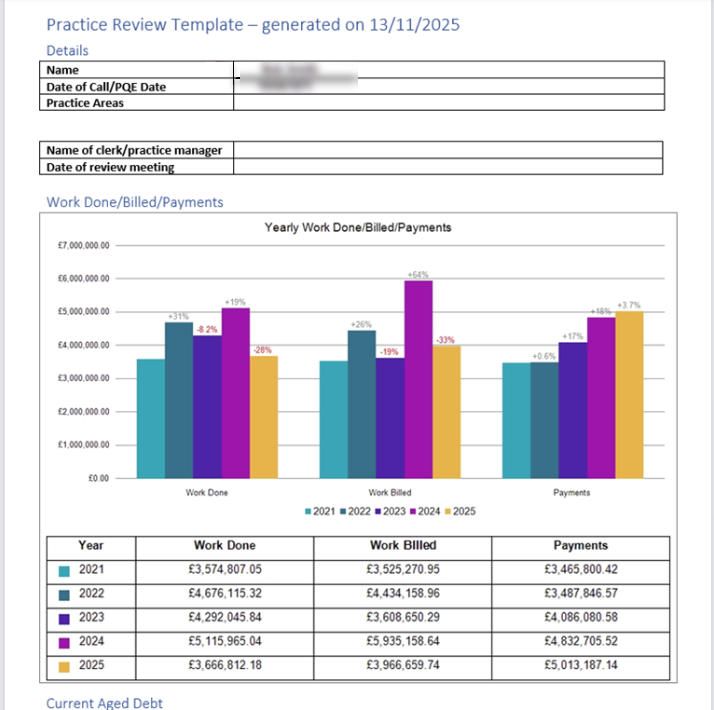
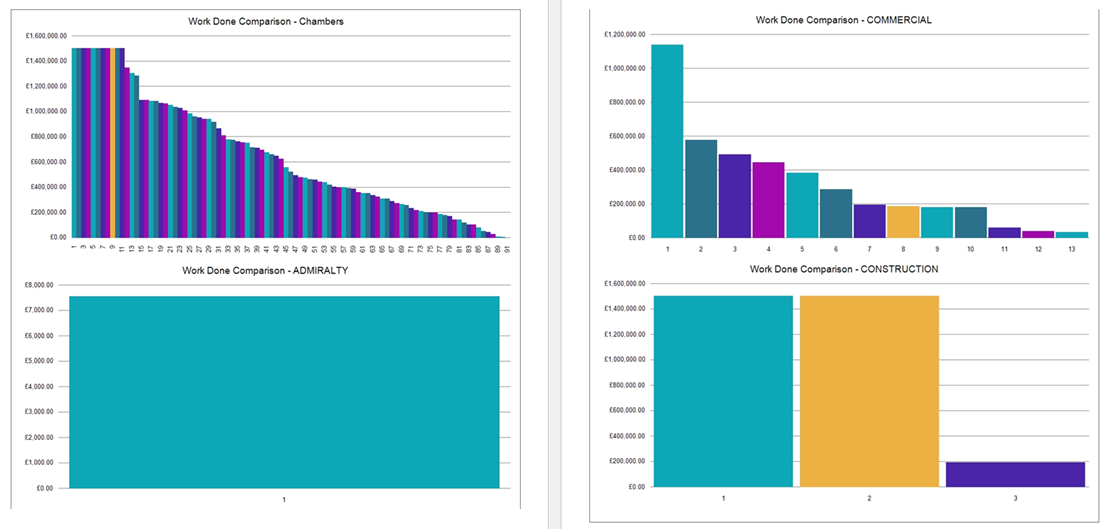
CRM functionality, a draft wireframe design of some of the values we intend to include are shown here | 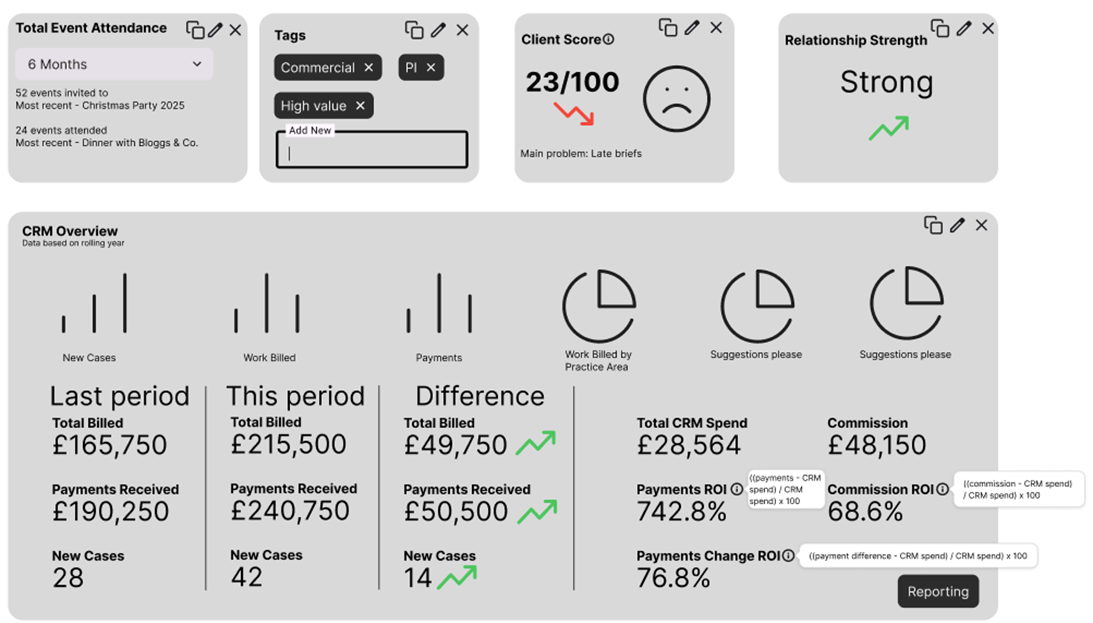 |
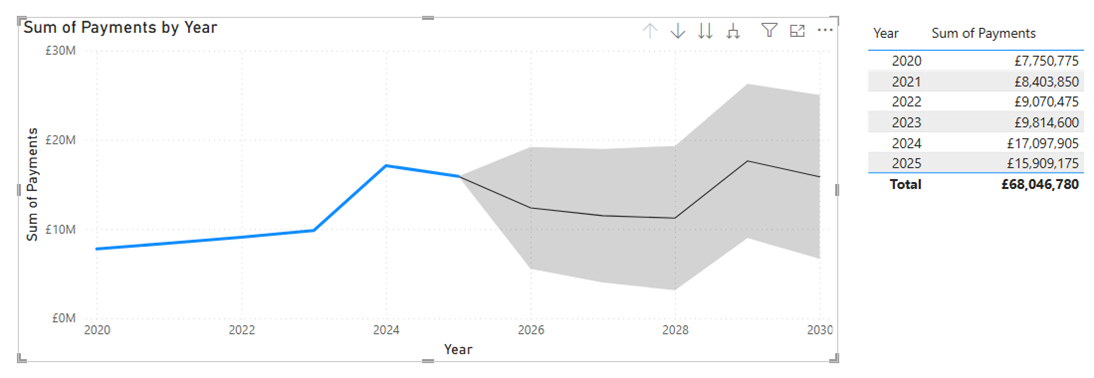
We already offer PowerBI which gives the potential to analyse your data any way you want, including the ability to forecast future projections:
How to get the best from your data?
As with any product, the data you get out is only as good as the data you put in. There are three critical components to ensuring you have the right foundation for your data: quantity/completeness, quality, and context/usability. Each of these ensures you have the best data feeding your reporting and analytics. Let's look at these three components to see what it means for you in reality
Quantity/completeness: Do you have complete data?
Are you completing all necessary fields at case, contact and company level. For example, does every case has the correct BMIF Area of Practice and do your contacts have up-to-date and valid email addresses?
Certain fields across these records can be made mandatory in LEX, as well as an option to allow only valid email addresses in contact records. Please contact support to discuss these further if you wish to implement them.
Quality: Can you trust the data?
There is always the potential for human error. There is also the potential that making fields mandatory can force users to put something, anything in just to complete the information.
The potential for this can be reduced by trimming down the number of options available to make it easier for the user to quickly select a valid option that will ensure reporting accuracy.
Context/usability: Does the data map to your needs?
As Mark Twain said, 'Data is like garbage. You'd better know what you are going to do with it before you collect it'. What are you aiming to achieve from your reporting, what data is most important, are there fields that aren't even useful for reporting purposes?
Ensuring these questions are answered will ensure you gather the best data possible in order to meet your needs. It ensures there is the right balance between the admin burden of filling these fields in with maximising the reporting you can get out of it.
Even if all fields are accurately completed, if the values don't provide focussed reporting it isn't meeting your needs. For example, if there are duplicates of different values in the same category, or too many values that are broadly similar, the data will be too dispersed to be reliable.
Instead, ensure duplicates are tidied up and try to streamline the number of values as much as possible to give enough differentiation without data being too dispersed and thin so as to be useful.
On the other hand, it may be that the values in use aren't giving you enough reporting use. For example, it's useful to break down reporting across BMIF codes, but are you using the higher-level 'Class' to group these codes together for a different level of analysis?
Was this article helpful?
That’s Great!
Thank you for your feedback
Sorry! We couldn't be helpful
Thank you for your feedback
Feedback sent
We appreciate your effort and will try to fix the article